Table of Contents
We really put a lot of effort into this project, we had also a long timeframe to build it, roughtly less than a month due to personal commitments.
Let's start from the beginning, the team was composed by these people:
- Andrea Ferretti (BatFerro): SFX Designer
- Vittoria Vignolini (Vivi): Illustrator Concept Artist
- Achille Ferrari (coca.cola): 3D Modeller
and me as programmer, tech artist, general designer and lead. I was already accustomed with many of the people in the team so it wasn't really difficult the collaboration part, all the asset creation, organizzation, delivery and implementation went pretty smoothly. However the weight of my three hats started to become a real issue.
The idea
A first person horror game where you explore an alien nuraghe. The place is filled with mamuthones, tipical sardininan masks all wearing goat fur, huge bells on their back and a wood handcrafted mask.
We wanted to convey the feeling of eariness of these creatures given by their famous dance with the bells. In the most important scene you will dress one of their costumes and engage with their dance without being caught by them.
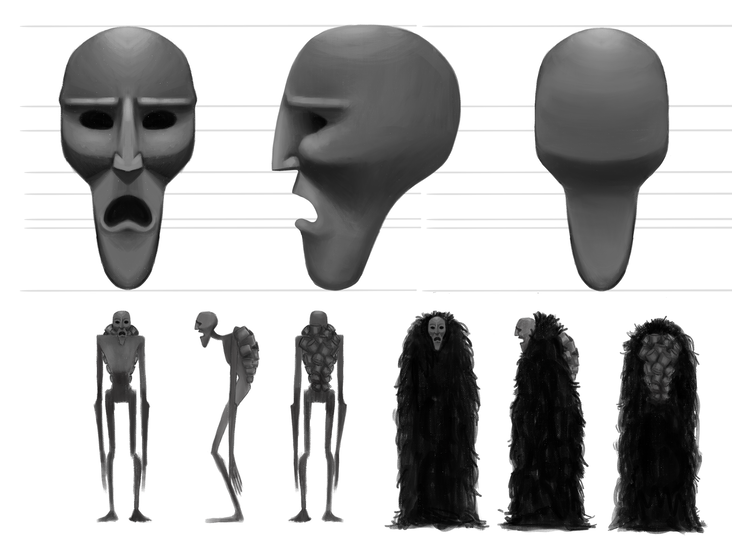
Enemy design
To each mamuthones I gave a Schedule, a series of Tasks pointing to different states in a state machine. These Tasks can be divided in two categories: Controlled tasks, where each action may emit a signal and be also connected to other incoming asynchronous signals, and Patrol tasks, where the main goal is to follow a predetermined path while being on the look spotting tha player in their view cone.
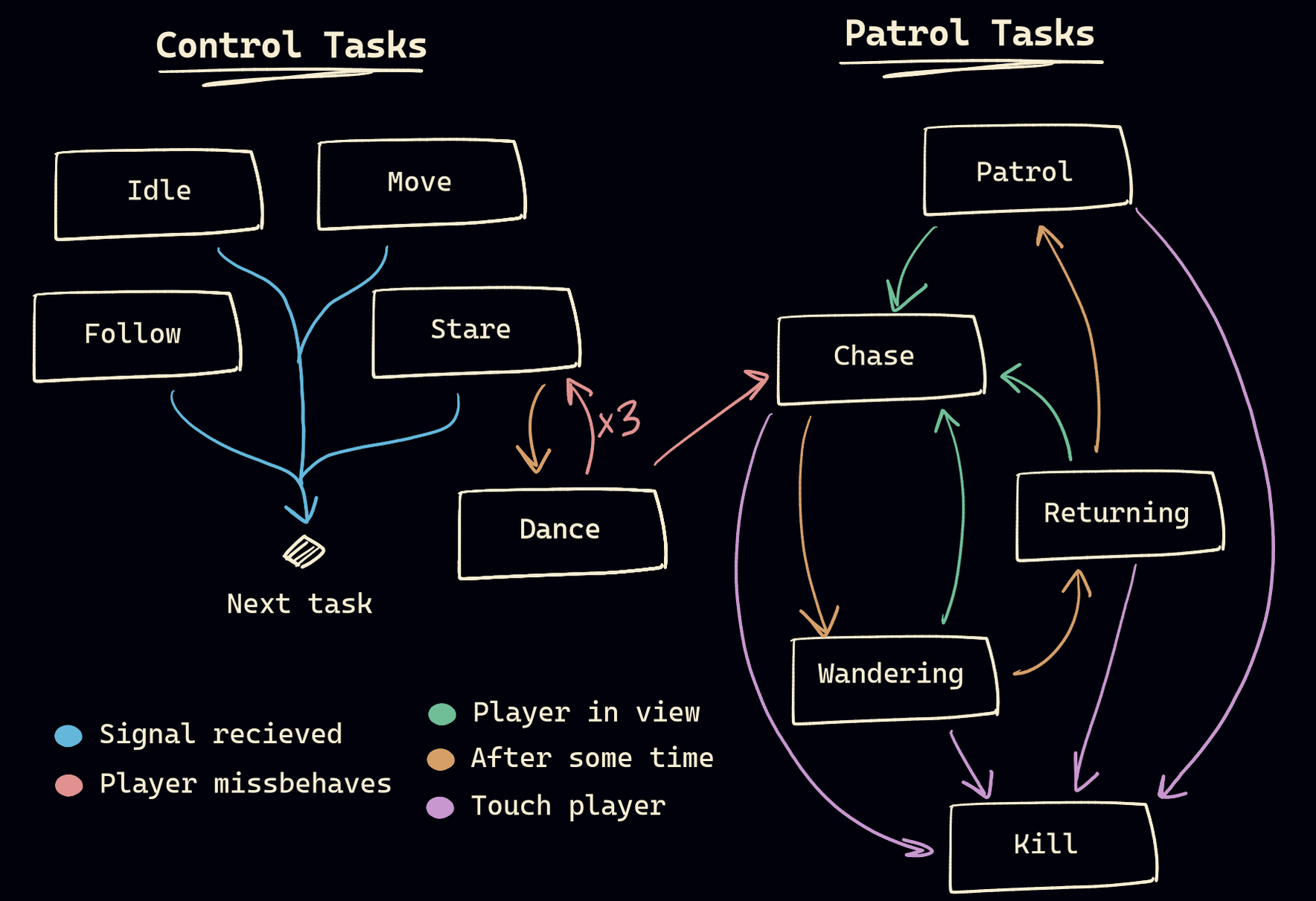
At the end of the development this design really began to be a pain to work with. I think the real issue was with the visualization and linking methods I created for the tool.
Next time I pick up a project of this size I will need to really think, ahead of time what kind of complexity a system needs to have, how can this overall complexity interface to the designer that will need to use the tool and how stable the infrastructure I will build will be.
When dealing with complex AI systems a State Machine will almost every time be unsustainable, I will prefer using state-of-the-art techniques such as Behaviour Trees or Goal-Based Agents.
Level design
First screen
In the span of the month I had a level in two parts, the first one serves as an introduction to basic enemy behaviour, getting accustomed to the player controller and overall onboarding on what is the player objective.
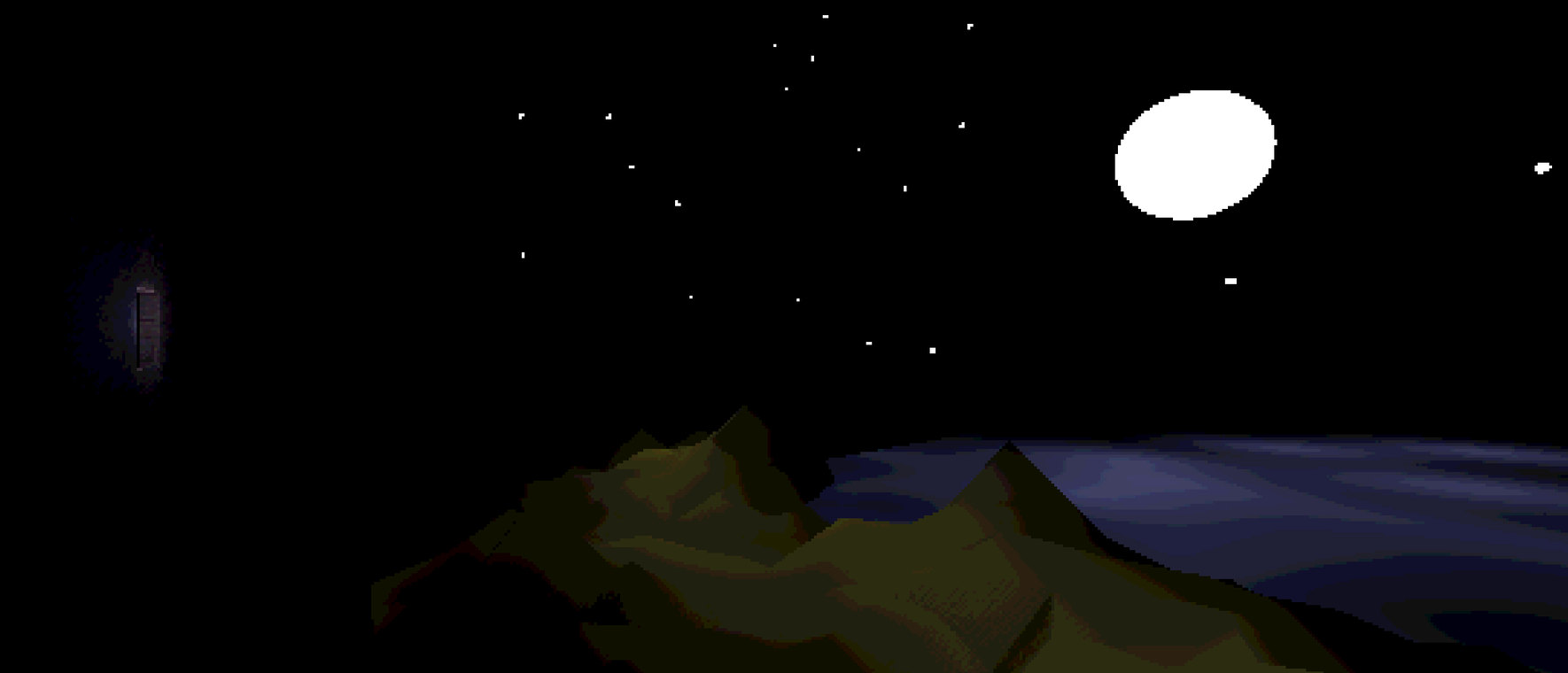
The first thing the player sees is the giant central bell and all its smaller counterparts, near it a circle of mamuthones, in my mind this was supposed to serve as the big final goal...
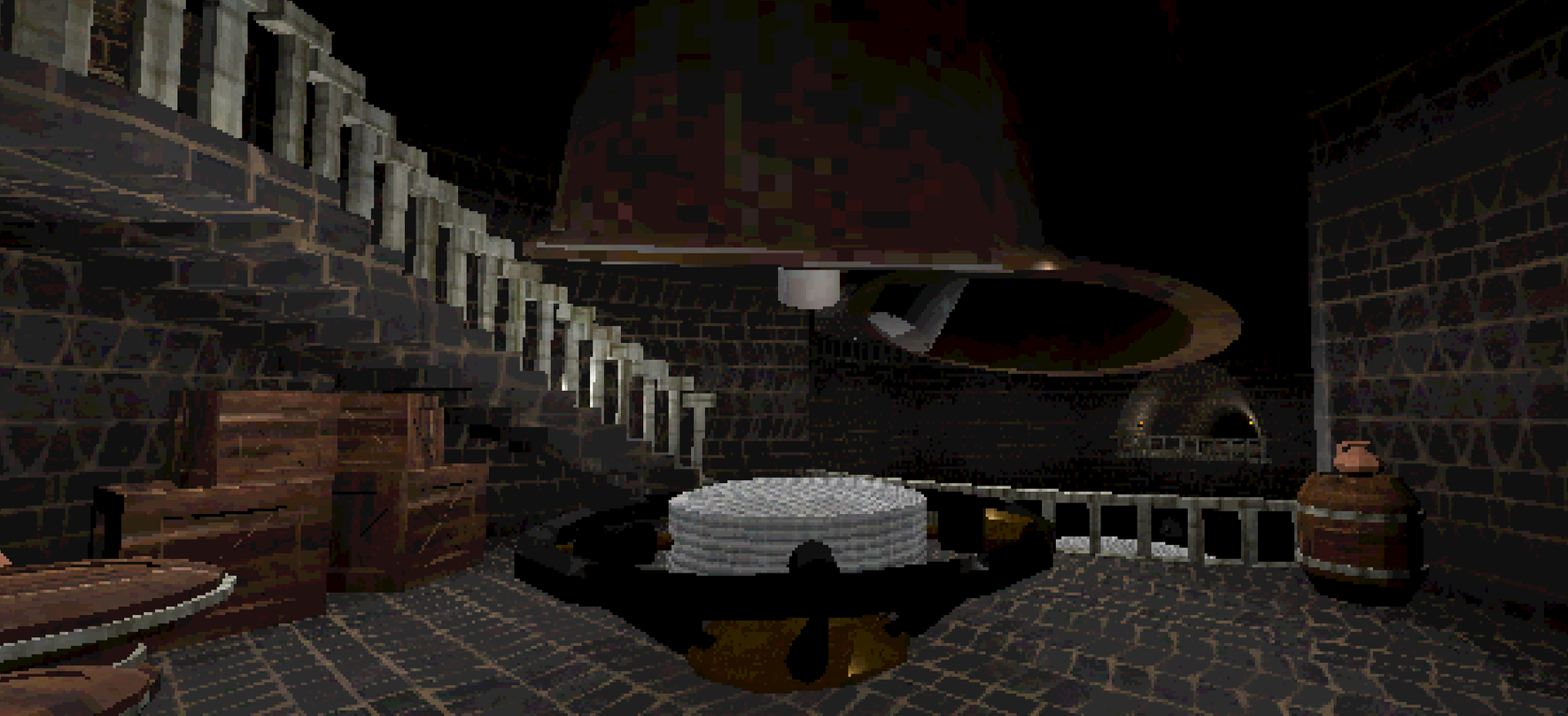
...however during playtest many players ended up not looking so interested to the view and run straight to the next room.
Players are not all naturally interested in landscapes especially if the meaning of the view is still really confusing and not clear.
First encounter
Following that, a series of rooms where the player needs to do some amount of stealth action, crawling through vents and hide behind barrels.
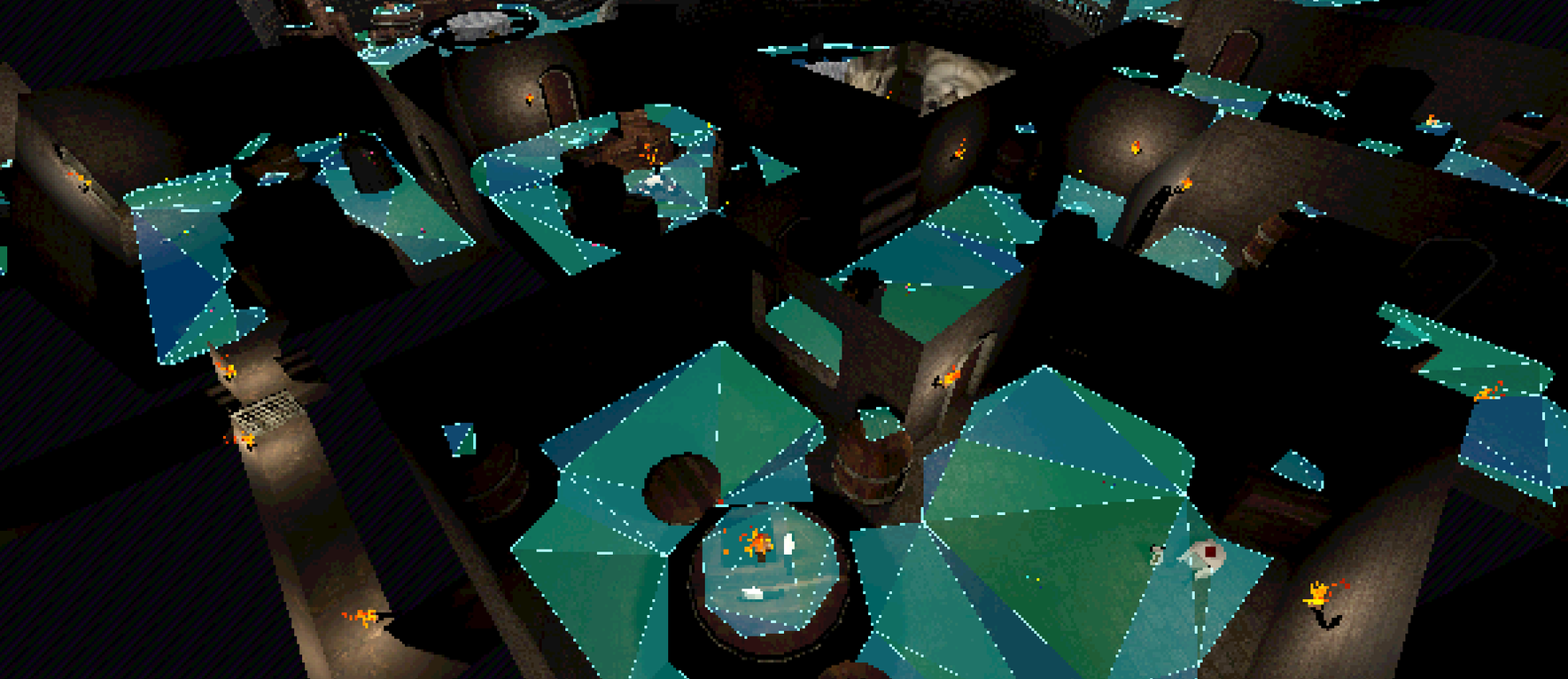
Looking back at it some ideas were good but the layout of it and the overall room layout feels frustrating to navigate through, in the end the player learns almost nothing about the enemy or its goals and the pacing it's too frenetic for no reason.
Intended path is not so obvious as the designer might think, you need to clearly state the goal and what is happening, otherwise the player will only be confused.
Maybe to fix some of the confusing things we could have added some voicelines that would suggest the intended way of thinking, but still the level design was terrible.
At the end of it the player deactivates one of the four main bells, this lowers all the lights in the game and makes the ambience noises more eerie.
Scripted sequence
The player enters a new area, the sound traps are introduced, whenever they are triggered a nearby enemy will be notified and begin chasing the emitting source, to neutralize them the player can muffle the mechanism with the already collected wool.
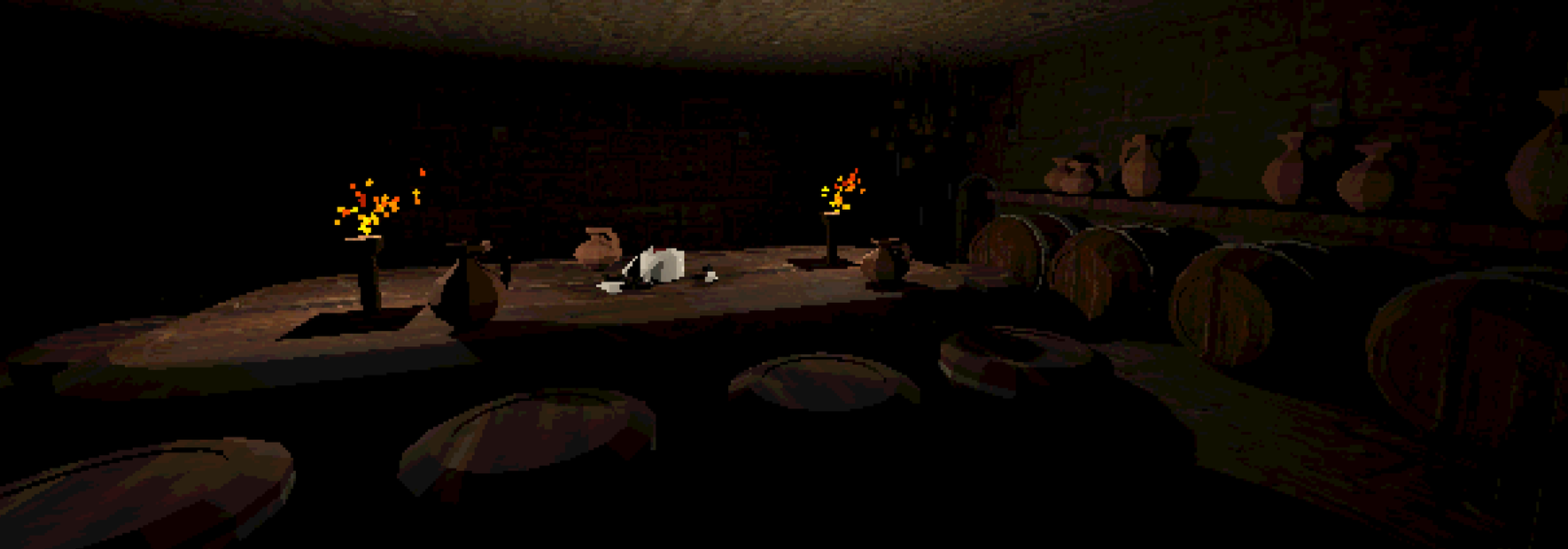
After some rooms the player discovers an unused mamuthones fur that can be used as a disguise, this will start a sequence where the player needs to lead some mamuthones to a room where after some time, they will all start to dance.
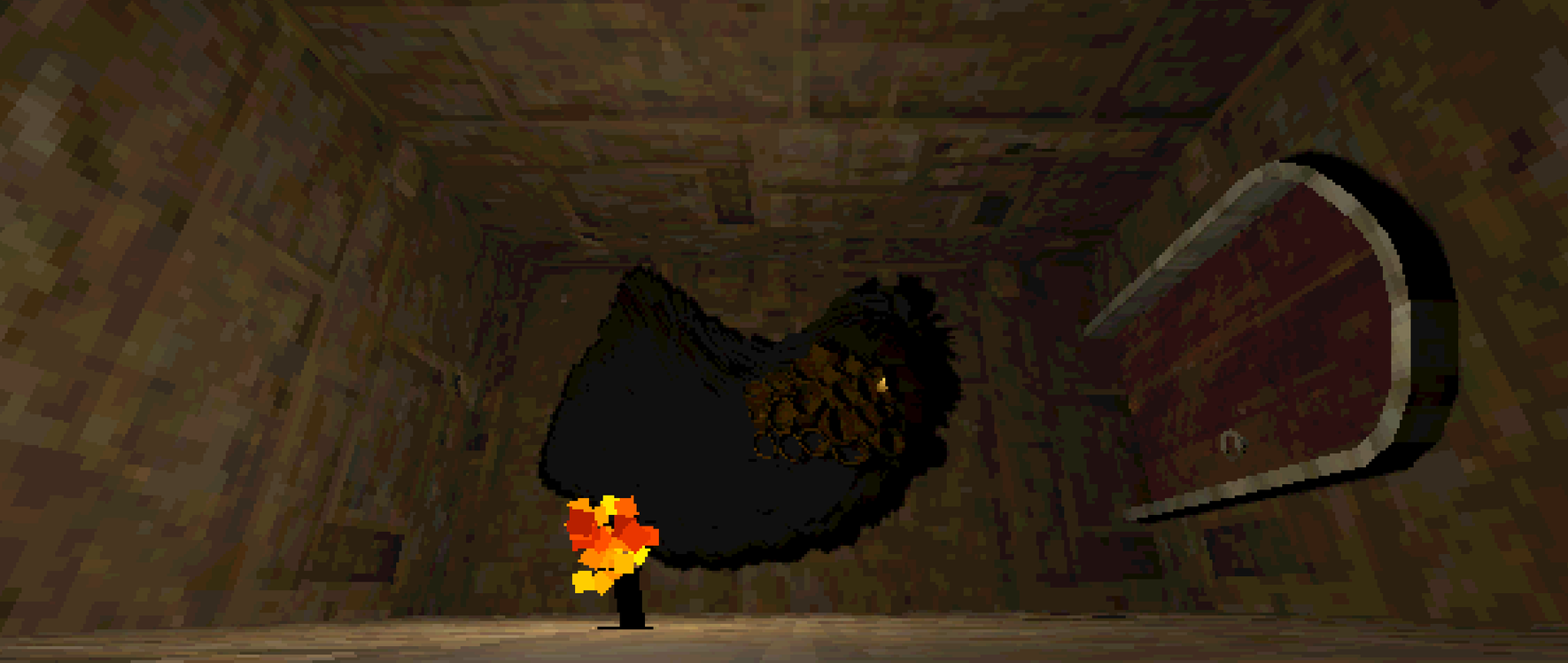
In this circumstance, the player will need to mimic the mamuthones moves in a short time frame for the whole duration of the corridor.
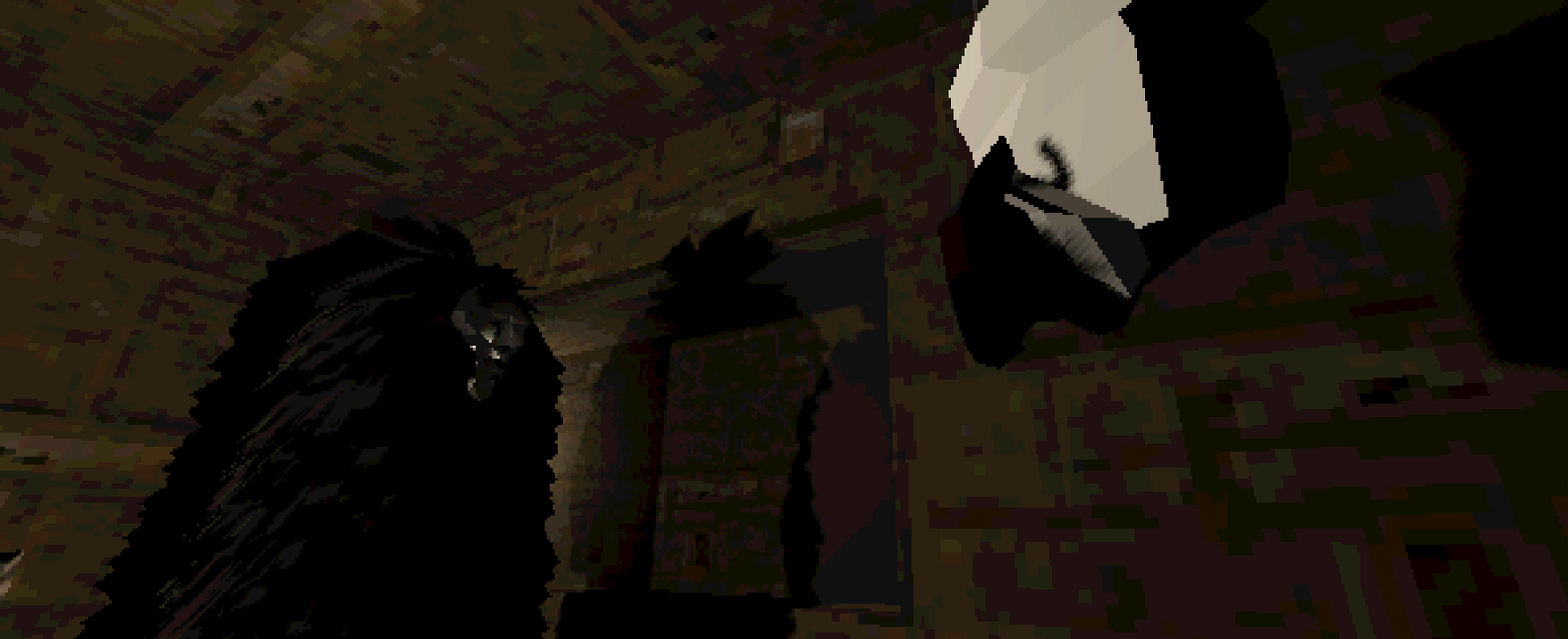
According to playtester this was the most interesting part of the experience, I agree with them, however some of them actually get bored or frustrated way before arriving to this section...
Aesthetics
We were really inspired by PS1 graphics for this one, the principle for the shader is pretty analogous to the one used for Babel Ascent but written way more clearly. There are two GLSL shaders that compile into Compositor Effects, the first one downsamples the frame and the second one performs 16-bit posterization and dithering.
Postmortem
I think the concept is still very valid, with a rework on the level design, a lot of bug fixes and by completing the story, it could be worthy of a Steam release.